
Can Fermented Foods Cause Stomach Cancer?
Initial publication date: 22 October 2026
Last reviewed: 22 October 2026
Next review due: 22 October 2027
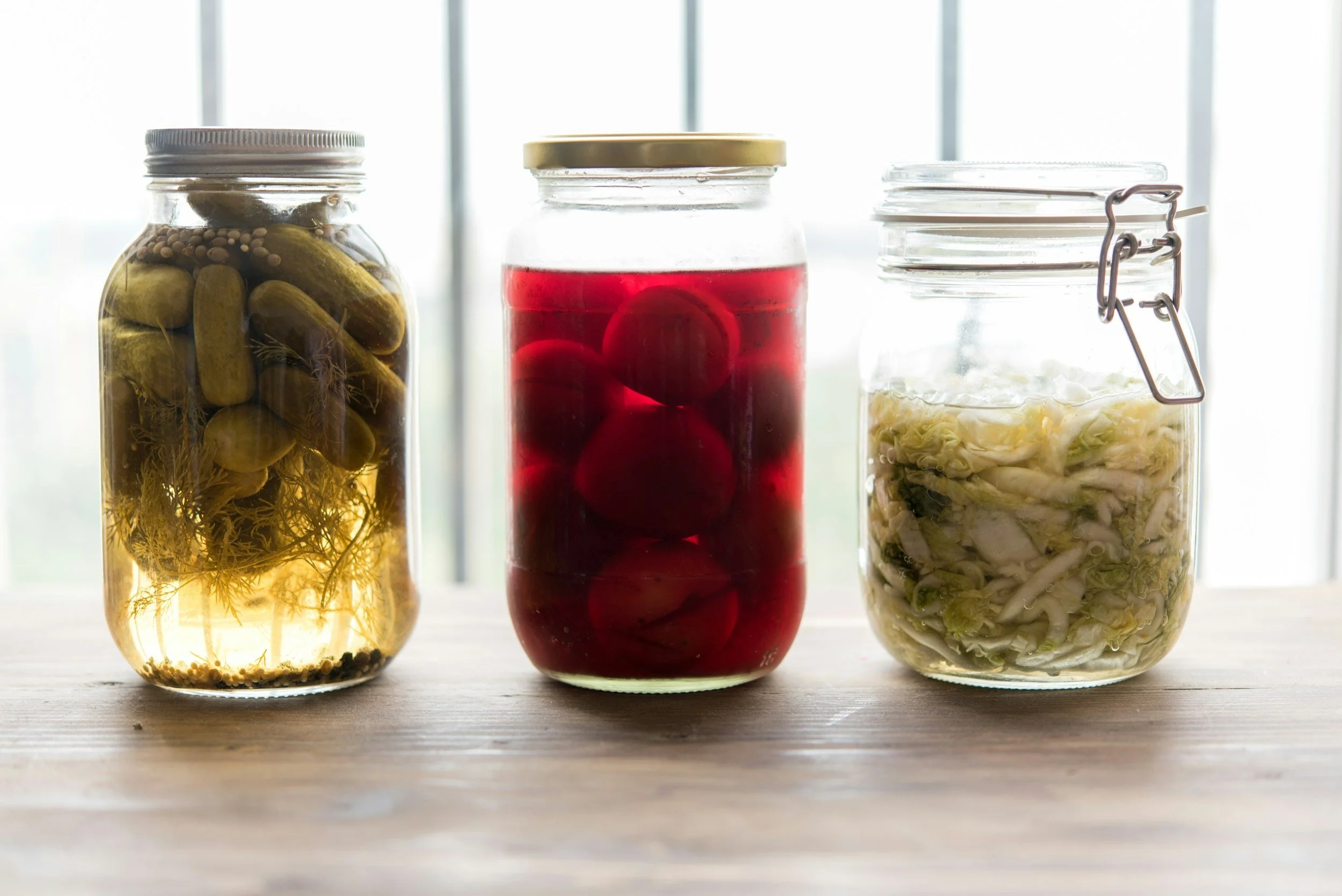
Fermented foods are everywhere right now. Kefir, kimchi, sauerkraut, miso and kombucha have all had their moment as gut-health heroes. So it can be alarming to read headlines suggesting that some of these foods might raise the risk of stomach cancer. Should you be worried?
The short answer: there is no clear evidence that fermentation itself causes stomach cancer. The concern is mainly about certain foods preserved with high amounts of salt, and the evidence surrounding their consumption. [1,2]
Here is what the research actually says.
Where does the concern come from?
Stomach (gastric) cancer rates are higher in parts of East Asia, where salted and pickled foods have traditionally been eaten in large amounts. The World Cancer Research Fund (WCRF) concludes that foods preserved by salting, including pickled vegetables and salted or dried fish traditionally consumed in parts of East Asia, are probably a cause of stomach cancer. [1,2]
Several studies have investigated this association. A meta-analysis of Japanese and Korean studies found that higher pickled vegetable intake was associated with an increased risk of gastric cancer, while higher fresh vegetable intake was associated with a lower risk. [3]
A separate meta-analysis, which included prospective cohort studies, estimated that each additional 40 g of pickled vegetables consumed per day was associated with a 15% higher risk of gastric cancer incidence. [4]
An earlier systematic review and meta-analysis of English and Chinese studies found an overall association corresponding to approximately 50% higher odds of gastric cancer among people with higher pickled food consumption. However, the studies varied considerably, and many were case-control studies, which can be affected by recall bias and other limitations. [5]
These findings are important, but they do not establish that all pickled or fermented foods carry the same risk.
Is it the fermentation, or the salt?
This is the key question, and the evidence points towards salt-preservation practices and the specific foods involved, rather than fermentation as a whole.
High salt intake may damage the stomach lining and contribute to inflammation. It may also interact with Helicobacter pylori (H. pylori) infection, potentially increasing the risk of stomach cancer. [1,4,6]
Salt-preserved foods can also contain nitrates and nitrites that may contribute to the formation of N-nitroso compounds, some of which are carcinogenic. However, the processes involved vary between foods, and the precise contribution of these mechanisms to the observed associations is not fully established. [4]
It is important to distinguish fermented foods from salt-preserved foods. Although some traditional preservation methods involve both salting and fermentation, these processes are not interchangeable. Studies may also group different preserved foods together, making it difficult to isolate the effects of fermentation itself.
Kimchi is a good example. A 2026 commentary examining kimchi and gastric cancer found that epidemiological findings remain inconsistent. The authors highlighted differences in sodium content, fermentation practices and overall dietary patterns as possible explanations. They proposed that reducing sodium while maintaining traditional fermentation methods may help reduce potential risks. [7]
The evidence therefore does not justify treating all fermented foods as a single category or concluding that fermentation itself causes stomach cancer.
What else raises stomach cancer risk?
No single food explains stomach cancer. Several factors can contribute to the development of the disease. [2,8]
One of the best-established risk factors is chronic infection with H. pylori. This bacterium can cause long-term inflammation of the stomach lining and is an established cause of certain types of stomach cancer. [6]
Other recognised risk factors include smoking and a high intake of salt-preserved foods. Genetic susceptibility, family history and other environmental factors can also influence risk. [1,2,6,8]
These factors can interact. For example, research suggests that a high-salt diet may worsen H. pylori-associated gastric inflammation and carcinogenesis. [6]
Understanding these broader risk factors is important because it helps put individual foods into perspective. Stomach cancer risk cannot be explained by fermentation alone.
So, what should you do?
You do not need to give up fermented foods simply because some salt-preserved foods have been associated with stomach cancer.
Instead, consider the type of food, its sodium content and your overall dietary pattern.
Be mindful of total salt intake. In Australia, the Nutrient Reference Values for Australia and New Zealand set a Suggested Dietary Target of 2,000 mg of sodium per day for adults to help reduce chronic disease risk, particularly high blood pressure. This is equivalent to approximately 5 g of salt per day. [9]
Choose lower-salt options where practical. Compare nutrition information panels when buying packaged foods, including kimchi, sauerkraut, sauces and other preserved products.
Enjoy fermented foods you like. There is no established universal portion size or frequency of fermented foods like kimchi or sauerkraut. The practical focus is on overall sodium intake and dietary variety, rather than fear of individual foods. Yoghurt, kefir, tempeh and sourdough are different from heavily salt-preserved vegetables. Their nutritional properties vary, but there is no reason to avoid them solely because they are fermented.
Eat a variety of vegetables and fruit. Include a range of fresh, frozen and canned options, alongside legumes and wholegrains. A varied dietary pattern provides fibre and a broad range of nutrients.
Avoid unnecessary food restriction. You do not need to eliminate fermented foods to support your gut health.
Consider other established risk factors. Avoid smoking, limit alcohol and discuss any concerns about H. pylori infection or a strong family history of stomach cancer with your GP. Testing and treatment for H. pylori are recommended in certain clinical circumstances, rather than as routine screening for everyone. [6]
When to see your GP
Persistent indigestion or stomach pain, unexplained weight loss, ongoing nausea or vomiting, difficulty swallowing or black stools warrant medical assessment. These symptoms can have many causes and do not necessarily indicate cancer, but they should not be ignored.
If you have concerns about H. pylori, a family history of stomach cancer or persistent digestive symptoms, your GP can assess whether further investigation is appropriate.
The bottom line
Fermented foods are not all the same, and fermentation itself has not been established as a cause of stomach cancer.
Research links higher consumption of certain salt-preserved foods with an increased risk of stomach cancer. However, these findings cannot automatically be applied to yoghurt, kefir, sourdough, tempeh or every other fermented food. [1,4,7]
The most useful approach is to consider the type of food, its salt content, how frequently you eat it and your overall dietary pattern. Enjoy the foods you love, aim for variety and avoid letting alarming headlines create unnecessary food rules.
Gut health is about the bigger picture, not finding one more food to fear.
If you would like personalised advice on gut health or fermented foods, the Eatwise Dietetics team is here to help.
This article is general information only and is not a substitute for individual medical or dietetic advice.
References
World Cancer Research Fund/American Institute for Cancer Research. Diet, Nutrition, Physical Activity and Stomach Cancer. Continuous Update Project Expert Report. Available at: https://www.wcrf.org/wp-content/uploads/2024/10/stomach-cancer-report.pdf
World Cancer Research Fund International. Stomach Cancer: Recommendations and Evidence. Available at: https://www.wcrf.org/preventing-cancer/cancer-types/stomach-cancer/
Fresh and pickled vegetable consumption and gastric cancer in Japanese and Korean populations: a meta-analysis of observational studies. Cancer Science. Available at: https://pubmed.ncbi.nlm.nih.gov/19860848/
Yoo JY, Cho HJ, Moon S, et al. Pickled Vegetable and Salted Fish Intake and the Risk of Gastric Cancer: Two Prospective Cohort Studies and a Meta-Analysis. Cancers (Basel). 2020;12(4):996. doi:10.3390/cancers12040996. Available at: https://pubmed.ncbi.nlm.nih.gov/32316595/
Ren JS, Kamangar F, Forman D, Islami F. Pickled food and risk of gastric cancer: a systematic review and meta-analysis of English and Chinese literature. Cancer Epidemiology, Biomarkers & Prevention. 2012;21(6):905–915. doi:10.1158/1055-9965.EPI-12-0202. Available at: https://pubmed.ncbi.nlm.nih.gov/22499775/
National Cancer Institute. Helicobacter pylori (H. pylori) and Cancer. Available at: https://www.cancer.gov/about-cancer/causes-prevention/risk/infectious-agents/h-pylori-fact-sheet
Yang JY, Kim KE, Cho SJ, Hur C. Kimchi friend or foe: preserving cultural foods developed pre-refrigeration. Preventive Medicine Reports. 2026;61:103357. doi:10.1016/j.pmedr.2025.103357. Available at: https://pubmed.ncbi.nlm.nih.gov/41560871/
Mamun TI, Younus S, Rahman MH. Gastric cancer—Epidemiology, modifiable and non-modifiable risk factors, challenges and opportunities: An updated review. Cancer Treatment and Research Communications. 2024;41:100845. doi:10.1016/j.ctarc.2024.100845. Available at: https://pubmed.ncbi.nlm.nih.gov/39357127/
9. National Health and Medical Research Council (NHMRC), Australian Government Department of Health and Ageing, and New Zealand Ministry of Health. Nutrient Reference Values for Australia and New Zealand: Sodium. Eat for Health. https://www.eatforhealth.gov.au/nutrient-reference-values/nutrients/sodium
Acknowledgement of Country
Eatwise Dietetics acknowledges the Traditional Custodians of the lands on which we live and work. We honour their deep and ongoing connections to Country, lands, waters, culture and community. We pay our respects to Elders past and present and recognise the importance of Indigenous knowledge in caring for Country and sustaining food systems for future generations.