

Initial publication date: 20 November 2026
Last reviewed: 20 November 2026
Next review due: 20 November 2027
We often talk about what we put into our bodies, but we should also talk about what comes out. It's not everyone's favourite dinner-table topic, but in clinic I find that many people have never been told what's normal when it comes to their bowel movements, and plenty put off mentioning changes that are worth checking.
Your bowel movements can offer useful clues about your digestive health. Frequency, stool form, consistency and colour can help you recognise what's normal for you and identify changes that may need further investigation.
Quick summary
Normal bowel frequency can range from three times a day to three times a week.
Soft, formed stools that are easy to pass (Bristol Stool Chart types 3–4) are generally considered ideal.
Brown is the usual stool colour, although food, medications and supplements can cause temporary changes.
Persistent changes in your usual bowel habits deserve attention, even if your frequency falls within the normal range.
Eligible Australians aged 45–74 can access free bowel cancer screening every two years.
What is poo actually made of?
Poo (stool or faeces) is the waste material left behind after your body has digested food and absorbed the nutrients it needs. As the remaining contents move through the large intestine, muscular contractions (known as peristalsis) propel them towards the rectum. Water and electrolytes are absorbed along the way, helping stool gradually take shape.
Although we often think of poo as simply leftover food, it is actually a complex mixture of several components:
Water: Makes up approximately 75% of faecal weight, although this varies depending on stool consistency, diet and intestinal transit time. [11]
Undigested food material: Includes dietary fibre, resistant starch and other food components that aren't fully broken down or absorbed in the small intestine.
Gut bacteria: Billions of microorganisms, both living and dead, contribute to stool composition.
Shedding intestinal cells: Cells from the intestinal lining are continually renewed and shed into the digestive tract.
Mucus and digestive secretions: Help lubricate and protect the intestinal lining as stool moves through the bowel.
Bile pigments: Products of bile metabolism, particularly stercobilin, contribute to the characteristic brown colour of stool.
The exact composition varies depending on diet, hydration, gut microbiota, digestion and intestinal transit time. [11]
What does a healthy poo look like?
Healthy bowel function involves more than how often you go. Stool consistency, ease of passage and associated symptoms are also important.
Generally, a healthy bowel movement is:
Soft and formed: Not excessively hard, dry or watery.
Easy to pass: Without excessive straining or prolonged time on the toilet.
Brown: Usually light to dark brown.
Comfortable: Without significant pain or persistent difficulty emptying your bowels.
There is considerable variation between individuals. Research in healthy adults has demonstrated a broad range of normal bowel frequency and stool consistency, reinforcing that there isn't one pattern everyone needs to achieve. [1]
How often should you poo?
One of the biggest misconceptions about bowel health is that you need to have a bowel movement every day to be 'regular'.
In reality, normal bowel frequency varies considerably. Population-based research supports a range of approximately three bowel movements per day to three per week in healthy adults. [1,4]
Frequency alone, however, doesn't determine whether someone is constipated or has diarrhoea.
For example, constipation can involve hard stools, excessive straining, incomplete evacuation or difficulty passing stool, even when bowel movements occur relatively frequently.
Similarly, having several bowel movements a day isn't necessarily diarrhoea if stools remain formed and this is your usual pattern.
The takeaway: Your usual pattern, stool consistency and how comfortably you pass a bowel movement are more informative than frequency alone.
The Bristol Stool Chart: What does your stool say?
The Bristol Stool Form Scale (BSFS), commonly known as the Bristol Stool Chart, is a validated clinical tool used to classify stool into seven types based on its shape and consistency.
Stool form is associated with intestinal transit time – the time it takes for contents to move through the digestive tract. Generally, harder stools are associated with slower transit, while looser stools are associated with faster transit. [2,3]
The chart is useful in both clinical practice and research for describing bowel habits and monitoring changes over time. However, it is a guide rather than a diagnostic tool.
Understanding the seven stool types
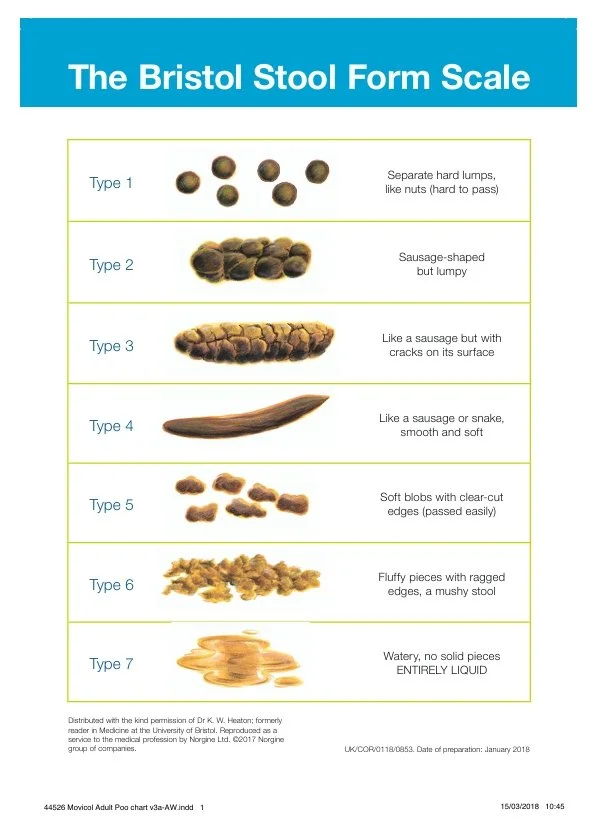
Types 1–2: Hard stools
These stool types are commonly associated with constipation and slower intestinal transit. They may indicate that stool is spending longer in the colon, allowing more water to be absorbed.
Types 3–4: Formed stools
These are generally considered the preferred stool forms. They are typically well-formed, soft and easy to pass.
Type 5: Soft blobs
These stools have clear edges and can occur in healthy bowel patterns. Occasional type 5 stools aren't necessarily a cause for concern.
Types 6–7: Softer and looser stools
These are more commonly associated with diarrhoea and faster intestinal transit. Persistent loose or watery stools, or a change from your usual pattern, may warrant further assessment. [3]
Does the colour of your poo matter?
Stool colour is largely influenced by bile, a digestive fluid produced by the liver and released into the small intestine to help digest fats. As bile pigments are broken down during digestion, they contribute to the characteristic brown colour of stool.
However, stool colour can also be influenced by diet, medications, supplements and intestinal transit time. Most colour changes are temporary and harmless, but some can indicate an underlying gastrointestinal or hepatobiliary condition. [4,10]
Here's what different stool colours may indicate:
Brown: Light to dark brown is the usual stool colour and generally reflects normal bile pigment metabolism.
Green: Can occur after eating leafy green vegetables or foods containing green food colouring. It may also occur when intestinal transit is faster, meaning bile pigments have less time to break down fully.
Yellow: Can sometimes be related to diet. However, persistent yellow, greasy, bulky or particularly foul-smelling stools may suggest fat malabsorption and warrant investigation.
Red: Foods such as beetroot and some food colourings can cause reddish stools. However, red or maroon stool can also indicate gastrointestinal bleeding and should be medically assessed.
Black: Iron supplements, bismuth-containing medications and certain foods can darken stool. However, black, sticky or tarry stools (known as melaena) can indicate gastrointestinal bleeding and require urgent medical assessment.
Pale, grey or clay-coloured: May indicate reduced bile reaching the intestine, potentially due to problems affecting the liver, gallbladder or bile ducts. Persistent pale stools, particularly alongside dark urine or yellowing of the skin or eyes (jaundice), require prompt medical assessment.
When should you be concerned?
An isolated colour change after eating certain foods is usually nothing to worry about. However, unexplained, progressive or persistent changes deserve attention.
Speak with your GP if you notice blood in your stool, unexplained weight loss, ongoing abdominal pain, unexplained fatigue or if you are unsure about a change in stool colour.
Seek urgent medical assessment for black, tarry stools, bloody diarrhoea or dark red blood mixed through your stool. Call 000 if you experience significant bleeding, faintness, dizziness or severe abdominal pain. [4,5]
Other things you might notice
Stool appearance can provide additional information about digestive function, although these observations aren't diagnostic on their own.
Mucus: The bowel naturally produces mucus to lubricate and protect the intestinal lining. Small amounts can be normal, but persistent or increased mucus, particularly alongside diarrhoea, abdominal pain or blood, warrants investigation.
Floating stools: Occasional floating stools are usually caused by gas. Persistent floating stools accompanied by a greasy appearance or difficulty flushing may indicate fat malabsorption.
Strong smells: Stool odour varies with diet, intestinal bacteria and digestion. A change in smell alone is not usually a reliable indicator of disease, but a persistent change alongside other gastrointestinal symptoms is worth discussing with your healthcare professional.
Undigested food: Small pieces of vegetable skin, corn or seeds can be completely normal. Some components of plant foods, such as skins, seeds and fibrous cell walls, aren't fully broken down during digestion and may be visible in your stool.
What influences your bowel habits, and how can you support them?
Bowel function is regulated by several interacting factors, including gastrointestinal motility, stool water content, dietary intake, medications and the gut–brain connection. [4,6]
Understanding these influences can help identify practical ways to support comfortable and regular bowel movements.
Dietary fibre and fluid intake
Fibre contributes to stool bulk and consistency. Different fibre types have different physiological effects: some increase stool bulk, while others are fermented by gut bacteria to produce short-chain fatty acids.
Include a variety of fruit, vegetables, wholegrains, legumes, nuts and seeds.
Australian Nutrient Reference Values list an Adequate Intake (AI) of:
25 g/day for adult women.
30 g/day for adult men. [8]
These values provide a general guide. Individual fibre needs and tolerance can vary, particularly for people with gastrointestinal conditions. Increase fibre gradually to minimise bloating and abdominal discomfort, and maintain adequate fluid intake. [9]
Drinking additional water alone, however, is unlikely to resolve constipation if you're already adequately hydrated.
Physical activity and daily routine
Regular movement, including walking, swimming and cycling, can support bowel regularity.
Maintaining consistent meal patterns may also help, as eating stimulates the gastrocolic response – a physiological reflex that increases colonic activity following a meal.
Try not to ignore the urge to defecate, allow enough time to use the toilet and avoid excessive straining. A footstool can help position your knees above your hips, making bowel movements easier.
Stress, hormones and lifestyle
Communication between the gut and brain influences intestinal motility, visceral sensitivity and bowel urgency. Stress and anxiety can therefore affect bowel habits.
Hormonal fluctuations, particularly across the menstrual cycle, may also influence gastrointestinal symptoms.
Adequate energy intake, sleep and stress management all contribute to digestive wellbeing.
Medications and underlying health conditions
Some medications and supplements can alter bowel habits. Iron supplements and opioids can contribute to constipation, while antibiotics and magnesium-containing products may cause looser stools or diarrhoea. The effects vary depending on the medication, dose and individual. Speak with your GP or pharmacist if you think a medication or supplement is affecting your bowel habits, rather than stopping it yourself.
Gastrointestinal conditions such as irritable bowel syndrome (IBS), coeliac disease, Crohn's disease and ulcerative colitis can also affect bowel habits and require individualised management.
Bowel cancer can also affect people of any age. While risk increases with age, younger people should not dismiss persistent or unexplained bowel changes. Family history and existing gastrointestinal conditions may also influence the need for further investigation. [6,7]
The National Bowel Cancer Screening Program provides eligible Australians aged 45–74 years with a free, home-based bowel screening test every two years. To participate, you must:
Be aged 45–74 years.
Have a green Medicare card or be registered with the Department of Veterans' Affairs.
Have an Australian mailing address.
People aged 50–74 are automatically mailed a screening kit every two years. Those aged 45–49 can request their first kit online or by calling 1800 627 701. [7] The screening program is designed for people without symptoms. If you experience rectal bleeding, unexplained weight loss or persistent changes in bowel habits, see your GP for appropriate assessment rather than relying on a home screening test.
Ultimately, there is no single approach that works for everyone. Dietary fibre, fluid intake and other lifestyle strategies should be tailored to your symptoms, tolerance and underlying health conditions.
When should you see a dietitian?
A dietitian can help identify dietary contributors to gastrointestinal symptoms, but red flags and persistent unexplained changes should be medically assessed rather than managed through dietary changes alone.
Once appropriate medical assessment has been undertaken, an Accredited Practising Dietitian (APD) can help explore whether dietary factors are contributing to constipation, diarrhoea, bloating or other gastrointestinal symptoms.
A dietitian can help you:
Assess your usual dietary intake, fibre intake and overall nutritional adequacy.
Identify potential dietary triggers without unnecessarily restricting food groups.
Explore appropriate fibre types and amounts for your symptoms.
Assess whether changes in meal patterns, fluid intake or dietary composition may be contributing to symptoms.
Navigate evidence-based dietary interventions, including the low-FODMAP diet when clinically appropriate.
Maintain nutritional adequacy and dietary variety while managing gastrointestinal symptoms.
There isn't one diet that works for everyone. The aim is to find an individualised, evidence-based approach that supports digestive health while keeping food enjoyable, nutritious and sustainable.
The bottom line
Healthy bowel habits are unique to you. Aim for soft, formed stools that are comfortable and easy to pass, while recognising that some variation is normal. Pay attention to persistent changes in your usual bowel pattern and seek medical advice when something doesn't seem right.
Understanding your bowel habits can help you recognise what is normal for your body, identify when further investigation is needed and make informed decisions about your digestive health.
Struggling with constipation, diarrhoea, bloating or unpredictable bowels?
At Eatwise Dietetics, we help people navigate IBS, constipation, bloating, coeliac disease and other digestive conditions. Together, we'll explore what's contributing to your symptoms and develop an evidence-based nutrition plan, without cutting out foods you don't need to.
Further reading and resources
Continence Health Australia – resources and information on bowel health and incontinence.
Healthdirect Australia: What your poo says about your health – information about stool appearance, colour and consistency.
National Bowel Cancer Screening Program – eligibility and information about Australia's free bowel screening program.
Irritable Bowel Syndrome (IBS): Understanding your gut and how a dietitian can help — Eatwise
Dietary Fibre: Benefits, Types & How to Eat More | Eatwise Dietetics — Eatwise
References
Walter, S. A., Kjellström, L., Nyhlin, H., Talley, N. J., & Agréus, L. (2010). Assessment of normal bowel habits in the general adult population: The Popcol study. Scandinavian Journal of Gastroenterology, 45(5), 556–566. https://doi.org/10.3109/00365520903551332
Lewis, S. J., & Heaton, K. W. (1997). Stool form scale as a useful guide to intestinal transit time. Scandinavian Journal of Gastroenterology, 32(9), 920–924. https://doi.org/10.3109/00365529709011203
Blake, M. R., Raker, J. M., & Whelan, K. (2016). Validity and reliability of the Bristol Stool Form Scale in healthy adults and patients with diarrhoea-predominant irritable bowel syndrome. Alimentary Pharmacology & Therapeutics, 44(7), 693–703. https://doi.org/10.1111/apt.13746
Healthdirect Australia. Stool changes. https://www.healthdirect.gov.au/symptoms/stool-changes
Healthdirect Australia. Blood in stool. https://www.healthdirect.gov.au/symptoms/blood-in-stool
Queensland Health. Constipation: Clinical Prioritisation Criteria. https://www.health.qld.gov.au/cpc/gastroenterology/constipation
Australian Government Department of Health, Disability and Ageing. Who should do the bowel screening test – and who should not. https://www.health.gov.au/our-work/national-bowel-cancer-screening-program/doing-a-bowel-screening-test/who-should-do-the-bowel-screening-test-and-who-should-not
National Health and Medical Research Council & New Zealand Ministry of Health. (2006). Nutrient Reference Values for Australia and New Zealand: Dietary fibre. https://www.eatforhealth.gov.au/nutrient-reference-values/nutrients/dietary-fibre
Queensland Health. Increasing dietary fibre. Nutrition Education Materials Online (NEMO). https://www.health.qld.gov.au/__data/assets/pdf_file/0029/835634/gastro-fibre.pdf
Healthdirect Australia. What your poo (stool) says about your health. https://www.healthdirect.gov.au/blog/what-your-poo-says-about-your-health
Rose, C., Parker, A., Jefferson, B., & Cartmell, E. (2015). The characterization of feces and urine: A review of the literature to inform advanced treatment technology. Critical Reviews in Environmental Science and Technology, 45(17), 1827–1879. https://doi.org/10.1080/10643389.2014.1000761
Web references accessed 20 November 2026.
Acknowledgement of Country
Eatwise Dietetics acknowledges the Traditional Custodians of the lands on which we live and work. We honour their deep and ongoing connections to Country, lands, waters, culture and community. We pay our respects to Elders past and present and recognise the importance of Indigenous knowledge in caring for Country and sustaining food systems for future generations.